
‘The Witch’ by Anton Chekhov
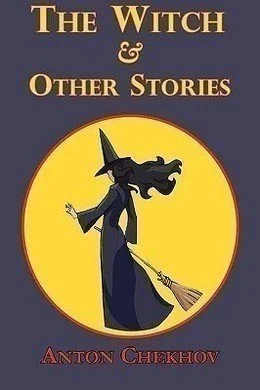
The Witch is a short story, less than 5,000 words, from the collection ‘The witch and other stories’. Chekhov wrote 16 short story collections, totalling 233 short stories altogether. Add classics like ‘Uncle Vanya’, ‘The Seagull’ and ‘The Cherry Orchard’ and to me, Chekhov isn’t just a giant of 19thC Russian literature, he’s a giant of world literature.
‘The witch’ grabbed me by the ears right away. It’s a story of a desperately unhappy marriage, a marriage of necessity and convenience, with accusations of not only infidelity but witchcraft that controls the weather. Unhappy, loveless marriages, marriage traps, marrying into money are regular Chekhov themes.
‘The Witch’ starts off as a mystery. Set in a hut belonging to a church that no-one attends anymore, with a winter snowstorm raging outside, there are only four characters and one of them is just an off-stage voice. Savely the sexton is lying awake in bed. He has coarse red hair and big unwashed feet. Raissa, his wife, is sewing. She is ‘a beautiful fountain’, has dimples, a handsome face with tempting-looking contours of her person. Her father was sexton, back when the church was patronised by the gentry but before he died, he arranged for her to marry one of the clergy, so as not to be evicted. And the Consistory sent her Savely, ‘a clumsy lout, a slug-a-bed.’
The storm outside mirrors the storm inside the hut, between the husband and wife. And the storm outside is fierce indeed.
‘And out there a regular battle was going on. It was hard to say who was being wiped off the face of the earth…’ ‘A victorious force was in full chase over the fields, storming in the forest and on the church roof, battering spitefully with its fists upon the windows, raging and tearing…’
Two miles from the church is the post road where the sledge carrying the post to the train can sometimes be heard passing by. And in very bad weather, people come to find shelter in their hut. And stay the night. Too often. Suspiciously often, for Savely’s liking. And they are young men, ‘not old men or bandy-legged cripples.’ She must be a witch. Savely’s language is filled with religious imagery, he seems to remember every feast and Saint’s day. Yet, surely his suspicions tip over into paranoia.
“I know that it’s all your doing, you she-devil! Your doing, damn you! This snowstorm and the post going wrong, you’ve done it all—you!”
Raissa denies it and mocks him. “Here’s a fool!” smiled his wife. “Why, do you suppose, you thick-head, that I make the storm?”
And it does so happen that the postman, fair-haired, young, handsome and his driver, lose their way in the snow, see the hut’s light through the storm and at their wits’ end from the cold, make for the sanctuary. Raissa can’t help but notice the postman’s ‘chest was broad and powerful, his hands were slender and well formed, and his graceful, muscular legs…’
Savely wants them to get warm then go on their way, deliver the post. Raissa wants them to stay longer, drink tea, not go back out in this bad weather. The young driver falls asleep in the warm. Savely goes back to bed, but turns and sees his wife sat on the stool, staring at the face of the sleeping postman.
‘Her cheeks were pale and her eyes were glowing with a strange fire.’
Then she suggests Savely turns out the light. Savely nearly does, then catches himself. “Isn’t that devilish cunning?” he exclaimed. “Ah! Is there any creature slyer than womenkind?”
Eventually, Savely wins, wakes up the postman and sends him on his way. But not before Raissa plays her last card. “Do stay,” she whispered, dropping her eyes and touching him by the sleeve. And he nearly succumbs to Raissa’s seduction. He ‘was suddenly overwhelmed by a desire for the sake of which mail-bags, postal trains... and all things in the world, are forgotten.’ But the driver blunders in to give him the hurry-up. The mystery is answered. Savely goes off with the post-sledge to show them the way. Alone, Raissa drops her mild mannered act and looks around at the miserable hovel, her cage, the life she has been forced to marry into. ‘Her face was contorted with hate… her eyes gleamed with wild, savage anger...’
Unless by some stroke of luck Savely freezes to death out there, this misery is all she has to look forward to, except once in a while, a handsome, seducible young man might happen by, when the weather’s bad enough. ‘Everything, including the absent Savely himself, was dirty, greasy, and smutty to the last degree…’
When Savely returns, having failed to fall into a snowdrift, she lets him have it.
“How miserable I am!” sobbed his wife. “If it weren’t for you, I might have married a merchant or some gentleman! If it weren’t for you, I should love my husband now! And you haven’t been buried in the snow, you haven’t been frozen on the highroad, you Herod!”
And the story might end there, with trapped Raissa’s despair. But there’s one more revelation. Raissa isn’t the only one trapped in a miserable, carping, malignant marriage. Savely now has no doubt about his wife’s witchcraft, she really can bring about storms designed to bring handsome young strangers seeking shelter to her door. But strangely, ‘this mysteriousness, this supernatural, weird power,’ gives her ‘a peculiar, incomprehensible charm’ in his eyes. And she is undressed after all, in bed. He touches her with no response. ‘Then he grew bolder and stroked her neck. “Leave off!” she shouted,’ and elbows him on the nose.
‘The pain in his nose was soon over, but the torture in his heart remained.’